
Single vs. Twin Outboard Engines: Which Is Better for Your Boat?
When shopping for a center console, one of the biggest decisions is how much power you need and how that power should be configured.
Should you choose one larger outboard or two smaller engines?
A single outboard generally offers a simpler installation and lower maintenance costs, while twin outboards can provide additional maneuverability, propulsion redundancy, and power options. The better choice depends on your boat’s design, intended use, budget, and manufacturer-approved engine configurations.
Here’s what to consider before making your decision.
What Is the Difference Between Single and Twin Outboards?
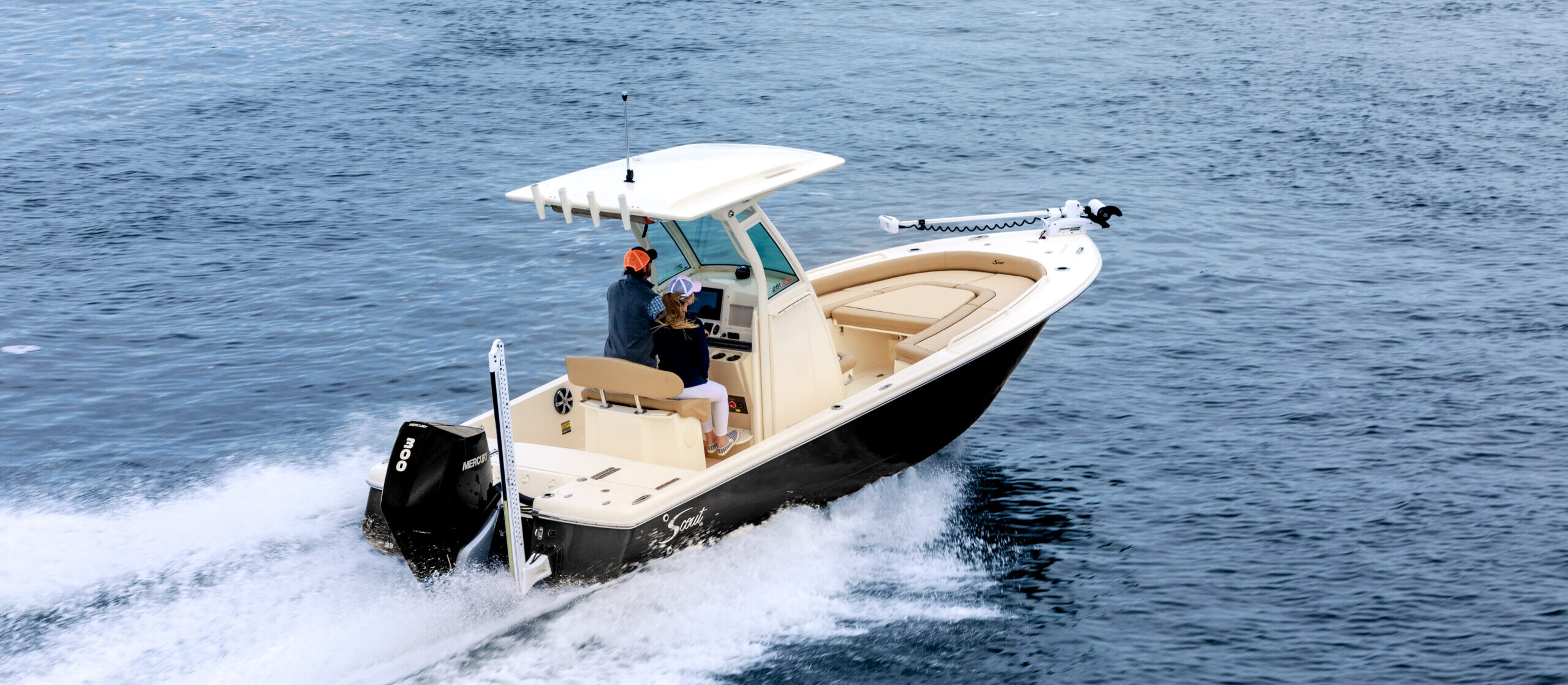
A single-engine boat uses one outboard motor for propulsion, while a twin-engine boat uses two.
Although twin-engine setups are common on larger offshore center consoles, the number of engines alone doesn’t determine how well a boat performs.
Total horsepower, engine weight, propeller selection, hull design, and rigging all influence the result.
Are Twin Outboards Better Than a Single Engine?
Twin engines offer several potential advantages, but they also introduce additional costs and complexity.
Advantages of Twin Outboards
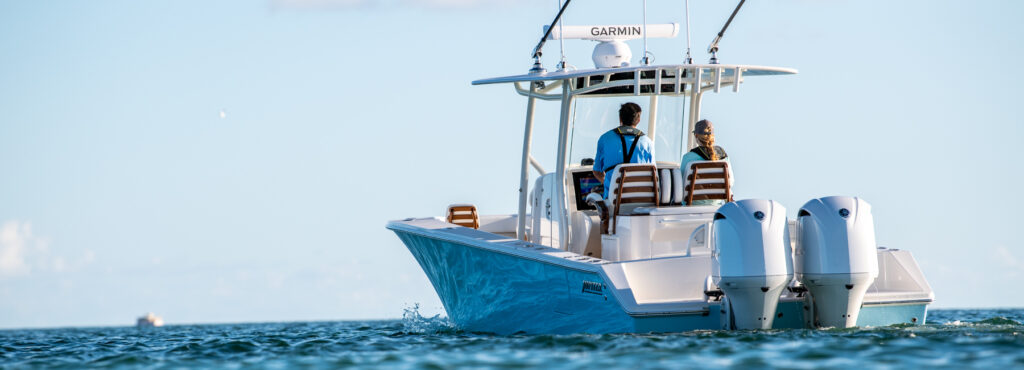
Maneuverability: Independently controlled engines can help with low-speed handling and docking, especially on boats equipped with compatible control systems.
Redundancy: If one engine becomes inoperable, the other may provide limited propulsion, depending on the boat and the nature of the problem.
Power options: On boats designed for multiple engines, twin outboards may provide the total horsepower required for the vessel’s intended performance.
Advantages of a Single Outboard
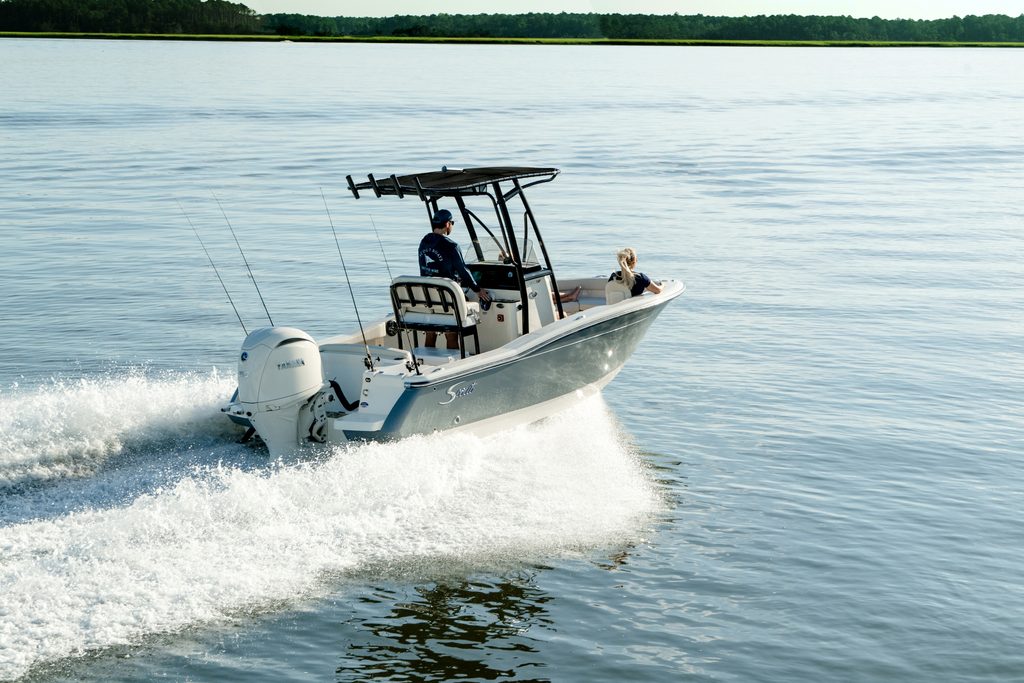
Simpler maintenance: One engine generally means fewer components to service.
Lower equipment costs: A single-engine installation can cost less to purchase, rig, and maintain than a comparable twin-engine configuration.
Less mechanical complexity: Fewer engines, controls, and related components can simplify ownership.
Do Twin Outboards Use More Fuel?
Not necessarily in every comparison.
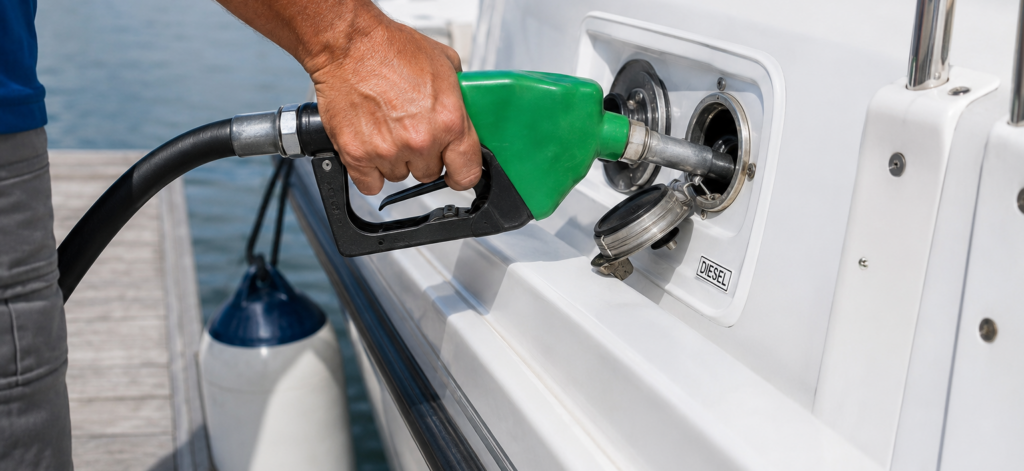
Fuel consumption depends on the engines, total horsepower, propellers, vessel weight, hull design, cruising speed, and operating conditions.
A properly matched twin-engine installation may perform efficiently on a hull designed for it, while an oversized or poorly matched setup can increase fuel consumption.
How to Compare Fuel Efficiency Correctly
Rather than comparing engine counts alone, look at manufacturer performance data for the specific boat and engine package.
Useful figures include:
- Cruising speed
- Fuel consumption in gallons per hour
- Fuel economy in miles per gallon
- Range at practical cruising speeds
- Total horsepower and engine weight
Comparisons are most useful when conducted under similar load and operating conditions.
Are Twin Outboards Safer for Offshore Fishing?
Twin engines can offer a valuable layer of propulsion redundancy, particularly for boaters traveling farther offshore.
However, having two engines does not eliminate the risk of becoming stranded.
Both engines may be affected by shared fuel contamination, electrical issues, severe weather, or other common failures.
Why Redundancy Matters Offshore
For anglers regularly fishing offshore from Ocean City, the ability to retain some propulsion after a single-engine failure can be an important consideration.
But offshore safety also depends on proper maintenance, fuel planning, communication equipment, weather awareness, and emergency preparedness.
A twin-engine setup should never replace those fundamentals.
Are Twin Outboards Easier to Dock?
Twin outboards can offer additional control during low-speed maneuvering because thrust can be applied independently.
For example, an operator may use differential thrust to help rotate the boat or make small adjustments near a dock.
What About Joystick Controls?
Some compatible multi-engine systems offer joystick maneuvering, which can make certain docking movements more intuitive.
Availability depends on the engine package, steering system, and installed controls.
Not every twin-outboard boat includes joystick capability.
Does a Single Outboard Cost Less to Maintain?
Generally, yes.
With one engine, owners typically have fewer oil changes, filters, spark plugs, lower-unit services, and other engine-specific maintenance tasks.
Two engines may also mean more components that can eventually require repair or replacement.
Don’t Forget Long-Term Ownership Costs
When comparing configurations, consider more than the initial purchase price.
Look at routine service, winterization, fuel consumption, insurance considerations, and potential major repairs over time.
For many boaters, these ongoing expenses are just as important as the performance differences.
Which Engine Setup Is Best for Chesapeake Bay Boating?
The right configuration depends on how you use your boat.
Family Cruising and Inshore Boating
A properly powered single-outboard boat may be a practical option for families who primarily cruise the Chesapeake Bay, visit waterfront destinations, and enjoy shorter outings.
Offshore Fishing and Longer Runs
Twin outboards may be appealing for boaters who regularly travel offshore and place a high priority on maneuverability, available power, and propulsion redundancy.
Larger Center Consoles
Many larger center consoles are designed around multiple-engine installations.
In those cases, the manufacturer’s approved engine packages and performance data should guide the decision rather than a general preference for one or two motors.
How Do You Choose the Right Outboard Configuration?
Before deciding, ask yourself:
- Where will I do most of my boating?
- How far offshore do I plan to travel?
- What engine configurations does the manufacturer approve?
- How important is low-speed maneuverability?
- What is my annual maintenance budget?
- How do the available configurations compare at normal cruising speeds?
A sea trial and model-specific performance data can help answer these questions.
Find the Right Boat and Engine Package with Intrinsic Yacht & Ship
At Intrinsic Yacht & Ship, our team helps boaters throughout Annapolis, Ocean City, and the Mid-Atlantic compare boats based on how they’ll actually be used.
From family-friendly center consoles to offshore fishing platforms, we’ll help you evaluate the performance, features, and ownership considerations that matter most.
Browse our inventory or connect with our sales team to explore your options.


